

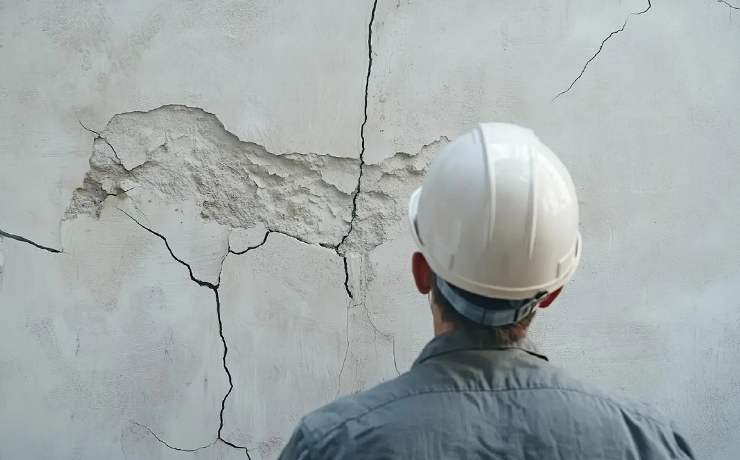
What Causes Concrete Cracks & How Can They Be Prevented in Abu Dhabi?
Concrete cracks are common, but the cause is not always the same. Some cracks come from normal shrinkage as concrete dries, others develop because of heat, moisture, settlement, or heavy loads. Abu Dhabi’s hot climate can make early-age cracking more likely.
Concrete cracks in Abu Dhabi can result from heat, shrinkage, poor curing, moisture, settlement, weak soil, and corrosion of reinforcement. Coastal conditions may also increase exposure to salt and moisture, while ground movement can lead to wider structural cracks. In this blog, we will cover the common causes of concrete cracks and practical ways to prevent concrete cracks in Abu Dhabi, helping you understand the right prevention methods for stronger and more durable concrete.
Causes of Concrete Cracks in Abu Dhabi
Concrete usually cracks when internal stress becomes greater than its ability to resist tension. The most common causes include:
- Drying and plastic shrinkage: Water leaves fresh concrete too quickly, causing the surface to contract.
- Thermal movement: Strong temperature changes make concrete expand and contract.
- Settlement: Movement in soil, foundations, or supporting layers can create cracks.
- Excess water in the mix: High water content can increase shrinkage and reduce durability.
- Heavy loading: Loads beyond the intended design can create structural stress.
- Reinforcement corrosion: Rusting steel expands inside concrete and can cause cracking and spalling.
- Moisture and chemical exposure: Water, chlorides, and aggressive environments can gradually damage concrete.
These causes are consistent with the common deterioration factors identified in UAE concrete guidance and local industry sources.
Concrete Cracks that Commonly Appear in Abu Dhabi
Not every crack has the same meaning. Common forms include:
- Shrinkage cracks: Usually thin and can appear as concrete loses moisture during drying.
- Thermal cracks: Develop when temperature-related expansion and contraction create stress.
- Settlement cracks: Often linked to movement below slabs, foundations, or structural elements.
- Structural cracks: Wider, growing, diagonal, or concentrated cracks may indicate a more serious load or movement issue.
- Cracks linked to corrosion: Rust stains, exposed reinforcement, and nearby spalling can indicate reinforcement corrosion.
Crack location, width, pattern, depth, and whether it is changing over time all help determine its significance.
How Do Heat, Humidity and Salt Affect Concrete in Abu Dhabi?
Abu Dhabi’s environmental conditions can increase concrete deterioration risks. High heat can speed up moisture loss from fresh concrete, while temperature differences can create movement and cracking. Humidity and water penetration can support corrosion when chlorides reach reinforcement.
Coastal salt exposure is especially important for reinforced concrete because chloride attack can contribute to reinforcement corrosion. Good mix control, proper curing, adequate reinforcement cover, drainage, and suitable protective measures help reduce these risks.
Construction Problems Causing Cracking in Abu Dhabi
Cracking is not always caused by the environment. Construction quality also matters. Common problems include poorly prepared or weak subgrade, incorrect water-to-cement ratio, inadequate compaction, poorly supported formwork, incorrect joint spacing, insufficient concrete cover, delayed or inadequate curing, finishing while bleed water is still present.
Proper planning before placement and careful control during placement can significantly reduce avoidable cracking. For construction-related cracking in Abu Dhabi; controlling water, using proper formwork and joints, allowing adequate curing and finishing, and preparing the site correctly can help reduce concrete crack risks.
How can concrete cracking be prevented in Abu Dhabi
The best prevention starts before the concrete is poured.
- Control the mix: Avoid unnecessary water and use a suitable mix design for the project conditions.
- Prepare the base: Compact the subgrade properly and provide suitable drainage.
- Plan for heat: Avoid unnecessary exposure during the hottest periods and control early moisture loss.
- Use correct reinforcement and joints: Proper reinforcement, concrete cover, and control joints help manage movement and cracking.
- Cure early: Begin curing as soon as practical after finishing to reduce rapid moisture loss.
- Control placement and finishing: Place, compact, and finish concrete correctly without adding uncontrolled water at site.
- Use suitable crack-control materials where specified: Synthetic microfibers and compatible admixtures can help control certain forms of cracking.
Concrete Crack Damage Assessment in Abu Dhabi
Assessment can begin with a visual review and crack measurement, followed by testing where required.
Depending on the structure and suspected damage, methods may include Ultrasonic Pulse Echo, Ultrasonic Pulse Velocity, Rebound Hammer testing, and Electrical Resistivity.
These methods can help assess crack depth, concrete condition, surface hardness, internal voids, moisture-related risks, and possible reinforcement concerns. Early assessment helps determine whether cracks are mainly surface-level or linked to deeper structural or material issues.
Factors such as crack width, depth, location, moisture exposure, crack pattern, and the surrounding concrete condition should be considered before selecting the appropriate corrective approach.
Preventing Concrete Cracks in Abu Dhabi
Concrete cracks can result from shrinkage, settlement, heavy loads, moisture, thermal movement, or reinforcement corrosion. In Abu Dhabi, high temperatures and rapid moisture loss can increase the risk of early-age cracking, making proper mix control and curing especially important. Good site preparation, stable ground, suitable reinforcement, correct joints, controlled placement, and proper curing all help prevent concrete cracks in Abu Dhabi.
Controlling excess water and temperature changes also helps reduce shrinkage and thermal stresses in concrete. Regular checks can help identify moisture ingress, widening cracks, corrosion, or other signs of deterioration before they become more serious. Suitable protective coating and the required surface preparation should be selected for the actual substrate and project conditions.
Cracks that continue to grow allow water through, or appear near structural elements should be assessed rather than simply covered. At Firestar, Our contractors perform concrete works with a focus on quality, durability, testing, and controlled execution. For project-specific guidance on preventing or addressing concrete cracking, Contact us to discuss the right approach for your Abu Dhabi project.